Why Large Venues Need a Navigation System (Not Just Signage)
Large venues often combine multiple floors, entrances, facilities, and destinations, making navigation difficult for visitors. As discussed throughout this guide, digital navigation can complement physical signage by helping visitors search for specific locations, understand routes, and access useful information while moving through complex spaces.
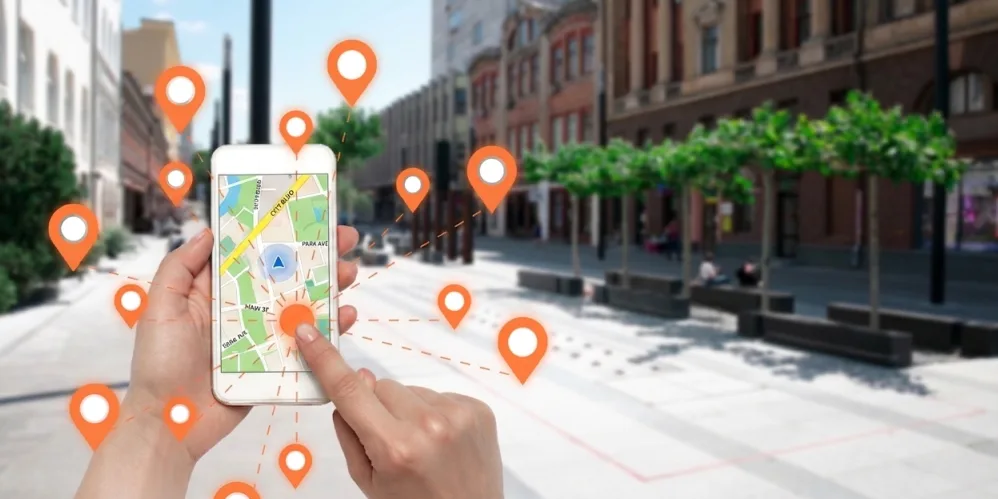
Printed signage remains an important part of navigating large venues, and it is not going away. Signs provide clear directions at entrances, corridors, gates, and other important locations.
The challenge is that signage alone cannot respond to every visitor's individual needs.
Visitors arrive with different destinations, languages, accessibility requirements, and levels of familiarity with the venue. A sign can point toward a general area, but a digital navigation system can help an individual visitor find a specific store, department, gate, exhibit, room, or facility.
This is why many large venues are adding digital navigation solutions alongside their existing physical signage.
Why Signage Alone Is Not Enough
Traditional signage works well for providing fixed, visible directions. However, large venues are dynamic environments where locations, routes, visitor needs, and operating conditions can change.
A visitor may need to find a particular destination rather than simply follow a general direction.
A large venue may also contain:
- Multiple floors
- Hundreds of destinations
- Several entrances and exits
- Different accessibility requirements
- Temporary closures
- Changing tenant or exhibit locations
- Visitors from different regions and languages
This is where digital navigation software can complement physical signage and provide a more flexible visitor experience.
Advantages of Digital Navigation for Large Venues
1. Digital Navigation Can Guide Visitors to Specific Destinations
A physical sign generally provides directions toward an area or destination. It cannot understand what an individual visitor is actually looking for.
For example, one visitor may want to find a particular store while another needs a restroom, hospital department, airport gate, or exhibition hall.
A digital navigation experience allows visitors to search for their specific destination and access relevant route information.
This makes navigation more personalized instead of relying on the same directional information for everyone.
2. Digital Maps Can Be Updated More Easily
Large venues are constantly changing.
Stores move, departments relocate, exhibits change, gates may be reassigned, and certain routes can temporarily close.
Updating physical signs can require printing, installation, and coordination across multiple locations.
A digital mapping platform can make location and map information easier to manage centrally. When the venue changes, operators can update the relevant digital information without replacing every physical sign.
This can be particularly useful for shopping malls, airports, hospitals, museums, stadiums, campuses, and convention centers.
3. Digital Navigation Can Support Multiple Languages
Large venues often serve visitors from different regions and countries. A single physical sign has limited space for presenting information in multiple languages.
Digital navigation can provide location and point-of-interest information in multiple languages, depending on the platform and content configured by the venue.
This allows visitors to access information in a way that is easier for them to understand and can make the overall navigation experience more inclusive.
4. Digital Navigation Can Make Accessibility Information Easier to Find
Accessibility information is an important part of the visitor experience.
Large venues may have accessible entrances, elevators, step-free routes, accessible parking, restrooms, and other facilities. However, visitors may not always know where these locations are.
A digital map can make accessibility information easier to discover. Where supported, visitors can identify accessible facilities or routes before starting their journey.
This turns accessibility information into something visitors can actively search for rather than something they have to ask staff about.
5. Digital Navigation Can Reduce Routine Wayfinding Questions
Front-of-house teams often spend time answering basic questions such as:
- Where is this store?
- How do I get to this department?
- Which floor is this exhibit on?
- Where is the nearest restroom?
- How do I reach this gate?
A digital navigation system can answer many routine questions through search, maps, and route information.
This does not replace venue staff. Instead, it can allow staff to spend more time helping visitors with complex questions, special situations, and personal assistance.
What Do Good Digital Navigation Systems Look Like?
A modern navigation setup does not need to choose between physical signage and digital technology.
The strongest approach combines both.
Physical Signage
Physical signs remain important for:
- Safety information
- Compliance requirements
- Emergency directions
- Fixed directional guidance
- Brand visibility
- Visitors who are not using mobile devices
Digital Navigation
Digital navigation can provide:
- Interactive maps
- Searchable destinations
- Route guidance
- Multi-floor navigation
- Points of interest
- Accessibility information
- Multiple languages
- Updated location information
Together, these create a more complete wayfinding experience.
Digital Mapping Systems vs. Traditional Signage
A physical sign and a digital map serve different purposes.
| Traditional Signage | Digital Mapping Systems |
|---|---|
| Fixed information | Interactive information |
| Visible at specific locations | Accessible through supported devices |
| Limited information space | Can provide richer location information |
| Physical updates required | Digital information can be updated |
| General directions | Destination-specific navigation |
| Limited personalization | Search and user-focused navigation |
The objective is not to eliminate signage. Digital mapping solutions fill the gaps that physical signs cannot easily address.
Where Digital Navigation Solutions Are Most Useful
Large and complex environments can benefit from digital navigation in different ways.
Shopping Malls
Help shoppers find stores, restaurants, parking, amenities, and entertainment areas.
Hospitals
Help patients and visitors locate departments, clinics, entrances, elevators, and facilities.
Airports
Help passengers navigate terminals, gates, lounges, baggage areas, and other facilities.
Museums and Attractions
Help visitors find galleries, exhibits, restrooms, restaurants, and other points of interest.
Stadiums and Arenas
Help guests find gates, seating areas, concessions, restrooms, and other facilities.
Convention Centers
Help attendees navigate exhibition halls, meeting rooms, booths, entrances, and event areas.
What to Look for in Digital Navigation Software
When evaluating digital navigation software, large venue operators should consider more than the appearance of the map.
Interactive Maps
Visitors should be able to explore the venue and quickly understand where destinations are located.
Search and Route Guidance
Users should be able to search for a destination and access clear route information.
Multi-Floor Support
Complex venues often require navigation across multiple floors, entrances, elevators, and escalators.
Accessibility Information
The platform should support relevant accessibility information and routes where this data is available.
Easy Content Management
Venue teams should be able to update locations, points of interest, and other information as the environment changes.
Mobile and Web Access
Visitors should have convenient ways to access digital maps through supported devices and channels.
Offline Capabilities
Offline access can be useful in areas where connectivity is unreliable, such as underground parking or large buildings with weak signals.
Why Choose OuterMap for Digital Navigation?
OuterMap provides a digital mapping platform designed to help organizations turn existing maps into interactive digital navigation experiences.
Turn Existing Maps Into Interactive Experiences
Organizations can use existing floor plans, maps, and other map assets as the foundation for a digital wayfinding experience.
Support Indoor and Outdoor Navigation
OuterMap can support both indoor and outdoor environments, making it suitable for different types of large venues and locations.
Help Visitors Find Important Locations
Interactive maps can help visitors search for stores, departments, facilities, attractions, entrances, and other points of interest.
Simplify Map Management
Venue teams can manage map and location information digitally, making it easier to keep the visitor experience aligned with changes within the venue.
Create a Better Visitor Experience
With OuterMap, organizations can add a digital navigation layer alongside their existing physical signage, helping visitors navigate complex environments with greater confidence.
How can OuterMap help large venues?
OuterMap helps organizations transform existing maps into interactive digital experiences, providing digital mapping and wayfinding capabilities that can complement physical signage and make complex venues easier to navigate.
Conclusion
Physical signage remains essential for large venues, but it cannot provide every visitor with personalized, searchable, and constantly updated navigation.
Digital navigation systems add a flexible layer that can help visitors find specific destinations, discover facilities, access accessibility information, and navigate complex environments more confidently.
For venue operators, digital mapping solutions can also make map management and visitor communication easier as locations and conditions change.
OuterMap helps organizations transform existing maps into interactive digital experiences, giving large venues a practical way to improve navigation while keeping the benefits of their existing physical signage.
Frequently Asked Questions
What are the advantages of digital navigation?
The main advantages of digital navigation include destination-specific guidance, interactive maps, easier updates, accessibility information, multilingual content, and a more convenient visitor experience.
What is a digital navigation system?
A digital navigation system uses software, maps, location data, and route information to help people find and navigate to destinations within a venue or environment.
Is digital navigation better than physical signage?
Digital navigation does not necessarily replace physical signage. The two serve different purposes and can work together to provide a more complete wayfinding experience.
What are digital mapping systems used for?
Digital mapping systems are used to represent physical environments digitally and help users explore locations, search for destinations, view points of interest, and access navigation information.
Can digital navigation support accessibility?
Yes. Depending on the platform and available venue data, digital navigation can help visitors identify accessible facilities, entrances, and suitable routes.
Can digital navigation work in large multi-floor venues?
Yes. A suitable digital navigation solution can support multiple floors and help visitors navigate between different levels, entrances, elevators, escalators, and destinations.
Can digital maps be updated when a venue changes?
Yes. Digital mapping solutions can allow venue teams to update locations and content without physically replacing every map or directional sign.