Minnesota State Parks in Winter: Best Trails and Planning Tips
Minnesota state parks offer quiet trails, frozen waterfalls and snowy forests in winter. This guide covers five of the best parks, plus the conditions, permits and gear to check before you go.
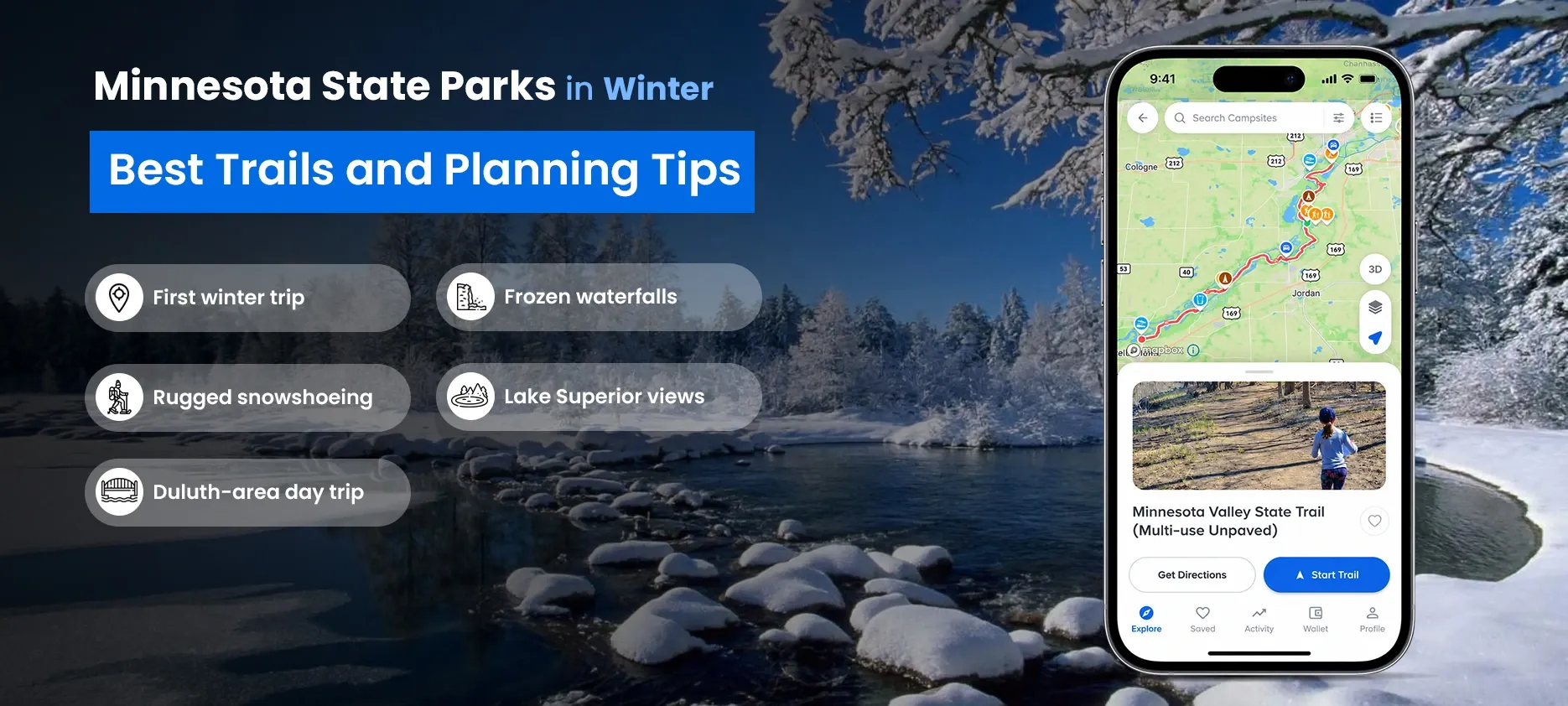
Minnesota's state parks don't shut down when the snow arrives. From the North Shore of Lake Superior to the Mississippi headwaters, you can ski, snowshoe or simply take a winter walk.
The best trip starts with choosing the right park for your activity, then checking conditions before you leave. Winter trails can change quickly, and a route that works for snowshoes may not be open to hikers or skiers.
Start with the table below to match a park to your activity.
The best Minnesota state parks in winter by activity
| Best for | Park | What to do |
|---|---|---|
| First winter trip | Itasca | Snowshoe popular routes or ski groomed trails |
| Frozen waterfalls | Gooseberry Falls | See the falls, then ski or snowshoe |
| Rugged snowshoeing | Split Rock Lighthouse | Take on the 4.5-mile Split Rock River Loop |
| Lake Superior views | Tettegouche | Hike or snowshoe to Palisade Head |
| Duluth-area day trip | Jay Cooke | Choose from ski and fat-bike trails |
What to check before you go
A few minutes of planning can save you from a closed trail, a missing pass or an empty rental rack.
- Trail conditions: Check the Minnesota DNR conditions page before you leave. Some trails open only after enough snow has fallen.
- Trail type: You can snowshoe almost anywhere in a Minnesota state park, but not on trails groomed for another activity, such as skiing or snowmobiling.
- Vehicle permit: You need a permit to drive into a state park. Last winter, it cost $7 for a day or $35 for a year.
- Ski pass: Skiers 16 and older need a Great Minnesota Ski Pass on groomed trails in state parks.
- Rentals: Some parks rent snowshoes or skis, but availability varies. Call the park before you rely on rental gear.
- Your map: Coverage can be limited in parts of some parks, so save your map before you arrive.
Best parks and trails for winter
Itasca State Park: Best for a first winter trip
Itasca is a strong all-round choice, especially if you want to spend a full weekend in the park. You can see the Mississippi River headwaters, then choose between snowshoeing and skiing.
The DNR lists the Dr. Roberts, Brower and Schoolcraft trails among the popular snowshoe routes. The park also grooms trails for both classic and skate skiing.
Itasca offers snowshoe rentals, but it doesn't rent skis, so bring your own. Daily ski passes are sold at the Jacob V. Brower Visitor Center. If you want to stay overnight, the park also has winterized camper cabins.
Explore the Itasca State Park map
Gooseberry Falls State Park: Best for frozen waterfalls
Gooseberry Falls is the classic choice if you want to see winter on the North Shore. The waterfalls may be frozen or still flowing, depending on the weather, and the park feels far quieter than it does in summer.
Start near the falls, then walk or snowshoe along the river toward Fifth Falls. If you ski, the park also has groomed cross-country trails, including a skate-ski loop.
Gooseberry has hosted candlelight and Learn to Snowshoe events in past seasons, so check its calendar before you choose a date.
Explore the Gooseberry Falls State Park map
Split Rock Lighthouse State Park: Best for rugged snowshoeing
The 4.5-mile Split Rock River Loop is the pick for experienced snowshoers. The DNR describes this route on the Superior Hiking Trail as hilly and rocky, with frozen waterfalls and a wide lake view at its east end.
This isn't the best choice for a first snowshoe trip, so allow extra time and turn back if conditions become difficult. Fat-bike riders can also look for groomed trails at the park.
The Minnesota Historical Society manages the Lighthouse Historic Site, while the state park manages the land around it. The historic site closes at dusk, so check its winter access before you plan around the lighthouse.
Explore the Split Rock Lighthouse State Park map
Tettegouche State Park: Best for Lake Superior views
Tettegouche is the place to go for big views with a shorter outing. In winter, reaching the top of Palisade Head becomes a short hike, and the reward is a panoramic view over Lake Superior.
The park also has groomed ski trails. Snowshoes can be rented from the visitor center, and you can use any trail except the groomed ski trails.
Year-round cabins and campgrounds make Tettegouche a good base if you want to spend more than a day on the North Shore.
Explore the Tettegouche State Park map
Jay Cooke State Park: Best for a Duluth-area day trip
Jay Cooke works well if you want a winter outing near Duluth. Explore Minnesota lists 32 miles of mostly intermediate cross-country ski trails, and the DNR publishes a separate fat-bike trail map for the park.
The St. Louis River valley gives the park its dramatic scenery. Stay well back from the river, because the DNR warns of steep cliffs and unpredictable water flows. Cell service isn't always reliable here, so save your route before you leave the parking lot.
Explore the Jay Cooke State Park map
What to do if there isn't enough snow
A low-snow forecast doesn't have to cancel your trip. Early in the season, or during a warm spell, change the activity rather than the destination.
- Go for a winter hike: Check which trails are open and whether they're icy.
- Join a naturalist program: State parks run programs through the winter, and they don't always depend on snow.
- Choose a candlelight event: The DNR says these events generally continue without snow as candlelight hikes.
Add a candlelight event to your trip
Candlelight events are one of the easiest ways to enjoy a state park on a winter evening. These free, family-friendly events use short, easy trails lit by lanterns or ice luminaries.
Last winter, the DNR planned 20 events at 17 locations between January 1 and February 28. Depending on the event and the snow, you may be able to walk, snowshoe or ski.
The event is free, but you still need a vehicle permit. Skiers 16 and older also need a ski pass at events that allow skiing. Check the DNR candlelight events page for this season's dates.
What to pack for a winter park visit
Pack for the coldest part of your day, not just the conditions at the parking lot.
- Warm layers and a change of dry socks
- Warm boots with a flat heel if you're snowshoeing
- Water and snacks
- A charged phone and portable battery
- Your saved map and the park's official information
Frozen waterfalls, rock and shoreline can be slippery, so stay on marked routes. In an emergency, call 911.
Plan your route with OuterMap
OuterMap gives you a digital map for each park in this guide, so you can look at the layout, find points of interest and plan where to go before you arrive. Save the map ahead of your trip, and you can still use it if your signal drops.
Digital maps work best alongside official information. Trail grooming, closures and winter conditions can change, so check the Minnesota DNR before you leave and follow all park signs when you arrive.
Want to see more parks? Read Making Minnesota State Parks Easier to Explore or open OuterMap's park maps.
Minnesota state parks in winter: FAQs
Are Minnesota state parks open in winter?
Yes, the parks in this guide offer winter recreation, but individual trails, buildings and services can change. Check the park's DNR page and current conditions before you leave.
Do you need a permit to visit a Minnesota state park in winter?
Yes. You need a vehicle permit to drive into a state park, including when you attend a free candlelight event.
Do you need a ski pass to snowshoe?
No. The Great Minnesota Ski Pass is for skiers 16 and older on groomed ski trails, but you still need a vehicle permit to enter the park by car.
Where can you snowshoe in Minnesota state parks?
You can snowshoe anywhere in a state park or recreation area, except on trails specifically groomed for another activity, such as skiing or snowmobiling.
Which Minnesota state park is best for frozen waterfalls?
Gooseberry Falls is the easiest choice for most visitors. Experienced snowshoers can also try the Split Rock River Loop.