What Is a Shopping Mall Navigation App? And Why Your Mall Should Have One
Shopping malls can be complex spaces where visitors need to find stores, restaurants, amenities, parking areas, and destinations across multiple floors. A digital mall navigation app can make this journey easier by bringing interactive maps, search, wayfinding, and location-based information into one convenient experience.
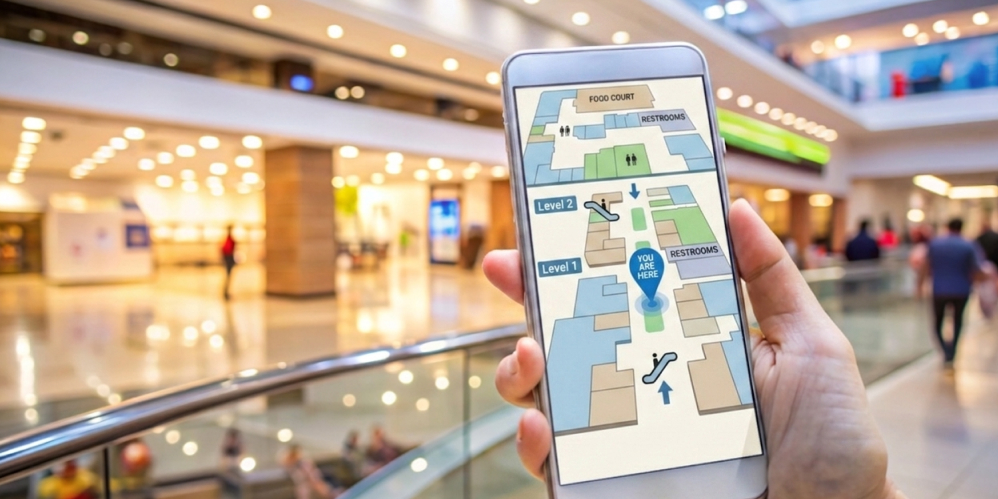
Shopping malls can be difficult to navigate, especially when they have multiple floors, hundreds of stores, restaurants, entertainment areas, parking zones, and different entrances. Traditional directories and signs provide useful information, but visitors often need a more convenient way to search for a specific store or find the best route to their destination.
A Shopping Mall Navigation App provides an interactive digital experience that helps shoppers find stores, amenities, restaurants, parking areas, and other points of interest. It can also support indoor wayfinding, store discovery, promotions, and visitor information.
For mall operators, a Shopping Mall Navigation Platform can bring maps, locations, navigation, and useful visitor content together in one digital experience.
What Is a Shopping Mall Navigation App?
A Shopping Mall Navigation App is a mobile or web-based digital experience that helps shoppers find and navigate different locations inside a shopping mall. Instead of relying only on a static directory, visitors can search for a store or facility and view its location on an interactive mall map.
Depending on the platform, shoppers may also be able to navigate between floors, find restaurants and amenities, discover promotions, and access other useful information.
A Shopping Mall Indoor Navigation App can be particularly useful in large malls where visitors may need to move between multiple floors and different sections of the property.
Store and Brand Search
Visitors can search for a particular brand, store, restaurant, or category instead of walking around the mall trying to locate it.
For example, a shopper could search for a clothing store, coffee shop, electronics retailer, or specific brand and immediately find its location.
Interactive Multi-Floor Maps
An interactive mall map can show stores, corridors, entrances, elevators, escalators, restaurants, restrooms, and other important locations.
For multi-level shopping centers, visitors can switch between floors and better understand how different areas of the mall are connected.
Indoor Navigation and Wayfinding
A Shopping Mall Wayfinding Platform can provide digital routes between locations. A visitor can select a destination and follow the displayed route instead of depending entirely on signs or asking mall staff for directions.
Parking and Car Location Assistance
Parking can be one of the biggest navigation challenges in a large shopping mall. A digital navigation experience can help visitors identify parking areas and, where supported, save information about their parking location so they can find their way back more easily.
Promotions and Events
A mall navigation app can also become a visitor engagement channel. Mall operators can highlight participating stores, promotions, events, restaurants, entertainment, and other activities alongside navigation information.
Updated Store and Location Information
Stores and facilities can change over time. A digital platform makes it easier to keep information such as store names, categories, locations, and other details updated.
Why Shopping Malls Need Digital Wayfinding
Navigation is an important part of the overall shopper experience. When visitors cannot easily find a store or facility, they may spend unnecessary time searching or asking for assistance.
A digital wayfinding app for shopping mall environments can make the experience more convenient.
Makes Large Malls Easier to Navigate
Large shopping malls can contain hundreds of stores spread across several floors. Digital maps and navigation can help visitors understand the mall layout and find their destinations more easily.
Improves the Shopper Experience
Visitors can search for what they need instead of relying only on static directories. This can reduce confusion and make the overall shopping journey more convenient.
Helps Visitors Discover More Stores
Interactive maps can make stores, restaurants, entertainment areas, and other points of interest easier to discover. Visitors may find locations they would not have noticed while simply walking through the mall.
Supports Multi-Floor Navigation
A Shopping Mall Indoor Navigation App can help visitors understand routes across different levels and locate elevators, escalators, and other connections between floors.
Makes Important Amenities Easier to Find
Visitors often need more than stores. A digital mall map can help them find:
- Restrooms
- Parking areas
- Elevators
- Escalators
- Food courts
- Restaurants
- ATMs
- Information desks
- Entrances and exits
- Entertainment areas
Key Features to Look for in a Shopping Mall Navigation Platform
Not every mall navigation product offers the same capabilities. Mall operators should focus on features that directly improve navigation, visitor experience, and content management.
Interactive Mall Maps
The platform should provide an easy-to-use digital map rather than simply displaying a static PDF. Visitors should be able to explore the mall and identify stores, facilities, and other locations.
Multi-Floor Navigation
For large shopping centers, multi-floor support is essential. Visitors should be able to understand where a destination is located and how to move between different levels.
Store Search and Categories
A good Shopping Mall Navigation Platform should allow visitors to search by store name, brand, category, or other relevant information.
Points of Interest
The map should support more than retail stores. Important points of interest can include restaurants, restrooms, parking, entrances, elevators, escalators, entertainment areas, and information desks.
Offline Navigation
Connectivity may be limited in underground parking areas or certain parts of a large building. Offline access to maps and relevant information can help provide a more reliable experience in such situations.
Mobile and QR Code Access
Visitors should be able to access the mall map conveniently from their smartphones. QR codes placed at entrances, directories, parking areas, or other strategic locations can provide quick access to the digital experience.
Easy Map and Content Updates
Tenant changes are common in shopping malls. Mall teams should be able to update store names, locations, categories, operating information, and other content without having to rebuild the entire map.
Promotions and Events
A navigation platform can also support promotional content such as featured stores, events, offers, and campaigns, helping mall operators connect navigation with visitor engagement.
Analytics
Depending on the platform, analytics can provide insights into searches, popular locations, and other usage patterns. These insights can help operators better understand how visitors interact with the digital map.
What to Check Before Choosing a Shopping Mall Wayfinding Platform
Choosing a Shopping Mall Wayfinding Platform involves more than checking whether it can display a digital map. Mall operators should evaluate how practical the platform will be for both visitors and internal teams.
Does It Work When Connectivity Is Limited?
Ask how the platform behaves when mobile data or Wi-Fi is unavailable. This is particularly important for underground parking areas and other locations where connectivity may be inconsistent.
A useful test is to disable mobile data and see whether the map and relevant navigation information remain available.
Can Your Team Update the Map?
Mall information changes frequently as tenants move, new stores open, and facilities are modified.
The mall team should ideally be able to update information such as:
- Store names
- Locations
- Categories
- Opening information
- Points of interest
- Promotions
- Events
without depending on the vendor for every minor change.
Can It Support Tenant Promotions?
A mall navigation platform can also support tenant marketing. Featured listings, promotional content, event tiles, and other digital placements can give participating stores additional visibility within the visitor experience.
Can It Handle Multiple Floors?
This is an important consideration for shopping malls with multiple levels. The platform should make it easy for visitors to understand floor layouts and navigate between them.
Can It Work With Your Existing Mall Map?
If your mall already has floor plans or digital maps, ask whether the platform can use those assets. This can reduce the work involved in creating a digital map from scratch.
How OuterMap Can Build a Shopping Mall Navigation App
OuterMap provides a digital wayfinding platform that can help organizations turn existing maps into interactive navigation experiences.
Turn Your Existing Mall Floor Plan Into an Interactive Map
Instead of starting with a completely new mapping environment, mall operators can use existing floor plans and maps as the foundation for their digital experience.
The map can be structured around stores, facilities, entrances, corridors, parking areas, and other important locations.
Add Stores, Facilities and Points of Interest
A digital mall map can include the locations visitors commonly need, including:
- Retail stores
- Restaurants
- Food courts
- Restrooms
- Elevators
- Escalators
- Entrances
- Parking areas
- Entertainment areas
- Information points
This gives visitors one place to search and explore the mall.
Manage Mall Information
Mall teams can manage location and content information through the platform, making it easier to keep the digital experience aligned with changes within the property.
Support the Visitor Experience
OuterMap brings interactive maps and digital wayfinding together to help shopping malls provide visitors with a more convenient way to explore stores, amenities, and other destinations.
Benefits of Using a Shopping Mall Indoor Navigation App
A well-designed Shopping Mall Indoor Navigation App can provide benefits for both visitors and mall operators.
- Better Shopper Experience: Visitors can find destinations more easily and spend less time trying to understand the mall layout.
- Easier Store Discovery: Interactive maps can help shoppers discover stores, restaurants, entertainment areas, and other locations.
- Better Access to Amenities: Important facilities such as restrooms, elevators, parking, and food areas can be easier to locate.
- Reduced Pressure on Information Desks: When visitors can search for destinations themselves, they may have less need to approach staff for basic directions.
- More Opportunities for Tenant Engagement: Featured stores, promotions, events, and other content can help mall operators create additional opportunities to engage visitors.
- More Useful Visitor Insights: Where analytics are available, search and usage data can help mall operators understand which locations visitors are looking for and how they interact with the digital map.
Conclusion
Shopping malls are complex environments, and helping visitors navigate them easily is an important part of the overall shopper experience. A Shopping Mall Navigation App can help visitors find stores, navigate multiple floors, locate amenities, discover promotions, and explore the mall with greater confidence.
For mall operators, a Shopping Mall Wayfinding Platform provides an opportunity to combine digital maps, navigation, location information, and visitor engagement in one experience.
OuterMap helps transform existing mall maps into interactive digital experiences, providing a practical Shopping Mall Navigation Platform for improving indoor navigation and making the visitor journey easier.
Frequently Asked Questions
1. What is a Shopping Mall Navigation App?
A Shopping Mall Navigation App is a digital tool that helps visitors find stores, restaurants, facilities, parking areas, and other locations inside a shopping mall. It can provide interactive maps, search, route guidance, and additional visitor information.
2. How does a shopping mall navigation app work?
Visitors can access a digital mall map through a mobile or web experience, search for a destination, view its location, and follow available directions. Depending on the platform, it can also provide information about stores, amenities, promotions, and events.
3. What features should a shopping mall navigation platform have?
Important features can include interactive maps, store search, multi-floor navigation, points of interest, route guidance, offline access, QR code access, content management, promotions, and analytics.
4. Can a shopping mall navigation app support multiple floors?
Yes. A suitable shopping mall navigation platform can support multi-floor maps and help visitors understand routes between different levels using elevators, escalators, and other connections.
5. Can shoppers use a mall navigation app without internet?
Some platforms support offline maps and navigation information. This can be particularly useful in underground parking areas or other parts of a mall where connectivity may be limited.
6. What is the difference between a mall navigation app and a traditional mall directory?
A traditional directory provides fixed information at a physical location. A mall navigation app provides an interactive digital experience where visitors can search for destinations, explore maps, and access navigation information from their devices.
7. Can a Shopping Mall Wayfinding Platform help promote tenants?
Yes. Depending on the platform, mall operators can use featured listings, promotional content, events, and other digital placements to give participating tenants additional visibility.
8. How can OuterMap help create a shopping mall navigation app?
OuterMap can help organizations turn existing maps into interactive digital wayfinding experiences. The platform can support locations, points of interest, interactive maps, and navigation to help visitors explore and navigate shopping mall environments.