Common Indoor Navigation Challenges and How to Solve Them
Finding a destination inside a large building can be challenging when visitors face multiple floors, complex layouts, unclear signs, or changing locations. Indoor navigation solutions can complement traditional signage by helping people search for destinations, understand routes, and navigate complex facilities more confidently.
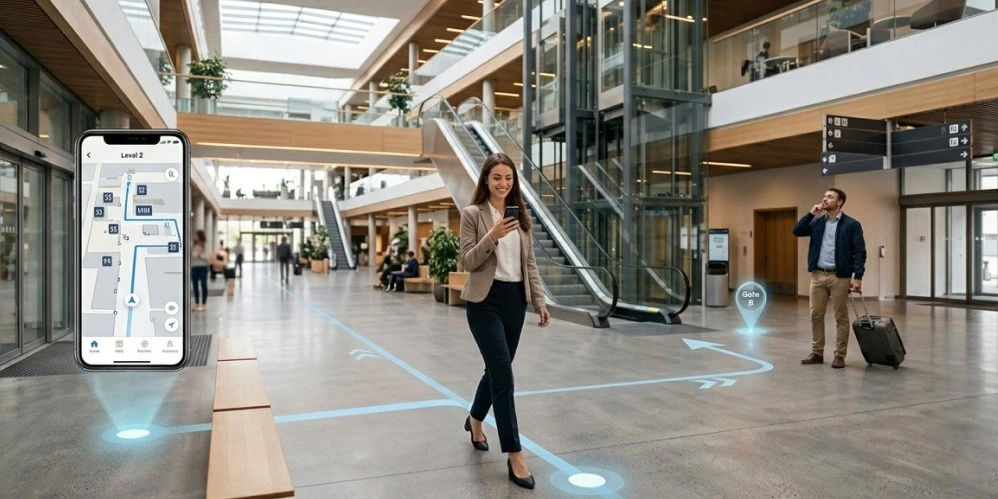
Navigating a large indoor space is often more difficult than people expect. Whether visiting a hospital, airport, shopping mall, university, museum, corporate office, or convention center, people want to reach their destination quickly without confusion. However, complex building layouts, unclear directions, and changing environments can make finding the right location a frustrating experience.
Poor indoor navigation affects more than just visitors. Employees spend valuable time giving directions, appointments may be delayed, and organizations often receive negative feedback because people struggle to find their way. As buildings become larger and more connected, creating a smooth navigation experience has become an important part of improving customer satisfaction and operational efficiency.
Many organizations now combine traditional signage with digital navigation technologies to simplify movement inside buildings. While every facility is different, understanding the most common navigation challenges is the first step toward creating a better visitor experience.
Why Indoor Navigation Is Important
People have become familiar with outdoor navigation through digital mapping applications. They expect the same level of convenience when entering large indoor spaces. Unfortunately, GPS technology is not always reliable indoors, making navigation significantly more challenging.
Visitors who cannot easily locate departments, meeting rooms, stores, classrooms, or service counters often become frustrated and depend on staff for assistance. This increases waiting times and reduces operational efficiency.
A well-planned indoor navigation strategy helps visitors move through buildings with greater confidence while allowing organizations to deliver a more organized and accessible experience.
1. Complex Building Layouts
Large facilities often include multiple floors, interconnected corridors, separate departments, and several entrances. Hospitals, airports, universities, and convention centers frequently expand over time, making their layouts more difficult for first-time visitors to understand.
People unfamiliar with the building may struggle to determine the correct route, especially when departments are located across different floors or buildings. Similar-looking hallways and multiple decision points can also increase confusion.
Solution
Organizations should create clear navigation pathways supported by consistent directional signs, building directories, and interactive digital maps. Providing visitors with a visual overview of the building before they begin their journey helps reduce uncertainty and improves navigation efficiency.
2. Outdated or Inconsistent Signage
Traditional signs remain an important part of indoor navigation, but they require regular maintenance. Building renovations, office relocations, temporary events, and departmental changes can quickly make printed signs inaccurate.
When navigation information is inconsistent, visitors often receive conflicting directions or need to ask staff for assistance. This not only affects visitor satisfaction but also increases the workload for employees.
Solution
Organizations should review and update navigation information regularly. Combining physical signage with digital wayfinding solutions makes it easier to provide accurate and up-to-date information without replacing every printed sign throughout the building.
3. Navigating Multi-Floor Buildings
Moving between multiple floors is one of the most common indoor navigation challenges. Visitors must decide whether to use elevators, stairs, escalators, or accessible routes while also understanding how different levels connect.
Without clear guidance, people may arrive on the correct floor but still struggle to locate their final destination.
Solution
Buildings should use consistent floor numbering, clearly identify vertical transportation options, and provide navigation information that helps visitors understand the relationship between different levels. Clear floor directories and logical navigation paths reduce confusion and improve the overall visitor experience.
4. Accessibility Barriers
Indoor navigation should be simple and inclusive for everyone. However, people with mobility limitations, visual impairments, or other accessibility needs often face additional challenges when navigating large buildings. Missing information about accessible entrances, elevators, ramps, or restrooms can make moving through a facility more difficult.
Creating an accessible environment is not only about meeting compliance requirements. It also improves the overall visitor experience by helping everyone navigate with greater confidence and independence.
Solution
Organizations should clearly identify accessible routes and facilities throughout the building. Keeping navigation information accurate and easy to understand helps visitors choose the most suitable path while supporting a more inclusive environment.
5. Frequent Building Layout Changes
Many large facilities change over time. Hospitals expand departments, shopping malls welcome new stores, universities renovate classrooms, and airports update terminals. If navigation information is not updated regularly, visitors may follow outdated directions and struggle to reach their destination.
Inaccurate directories can also increase the number of visitors asking staff for help, reducing productivity and creating unnecessary delays.
Solution
Navigation information should be reviewed whenever building layouts change. Maintaining accurate directories, updated maps, and clear signage helps visitors receive reliable guidance while reducing confusion across the facility.
Best Practices for Improving Indoor Navigation
Improving indoor navigation requires a combination of thoughtful planning, clear communication, and modern navigation tools. Organizations that regularly review their navigation strategy can create a smoother experience for visitors while improving operational efficiency.
Some practical best practices include:
- Keep maps and directories updated.
- Use clear and consistent directional signs.
- Make important destinations easy to locate.
- Prioritize accessibility throughout the building.
- Gather visitor feedback to identify navigation issues.
- Review navigation routes whenever building layouts change.
- Combine physical signage with digital wayfinding solutions where appropriate.
Following these practices helps reduce confusion and creates a more organized experience for visitors, employees, and guests.
Frequently asked questions
1. What causes indoor navigation challenges?
Indoor navigation challenges are usually caused by large building layouts, multiple floors, outdated signage, changing environments, and limited directional information. These factors make it difficult for visitors to locate their destination quickly.
2. Which industries benefit from better indoor navigation?
Large facilities such as hospitals, airports, universities, shopping malls, museums, corporate offices, convention centers, and event venues can all improve visitor experiences by simplifying indoor navigation.
3. How can organizations improve indoor navigation?
Organizations can improve indoor navigation by maintaining accurate maps, updating signage regularly, improving accessibility, simplifying navigation routes, and using digital wayfinding solutions to provide clear directions.
4. Why is accessibility important for indoor navigation?
Accessible navigation helps people with different mobility and accessibility needs move through buildings safely and independently. Clear navigation information creates a better experience for every visitor.
Conclusion
Indoor navigation challenges can affect visitor satisfaction, accessibility, and operational efficiency in any large facility. By improving navigation strategies, maintaining accurate information, and adopting modern digital solutions, organizations can create indoor spaces that are easier to navigate and more welcoming for everyone.
Many organizations also use Indoor Mapping Software to support interactive building maps and improve navigation experiences. If you want to understand how digital indoor maps work and the benefits they offer, explore our complete guide to Indoor Mapping Software.