How Self-Guided Tours Are Transforming Adventure Tourism
Self-guided tourism gives visitors greater freedom to explore at their own pace. Interactive digital maps support this experience by helping them find trails, attractions, facilities, and points of interest while navigating unfamiliar outdoor destinations.
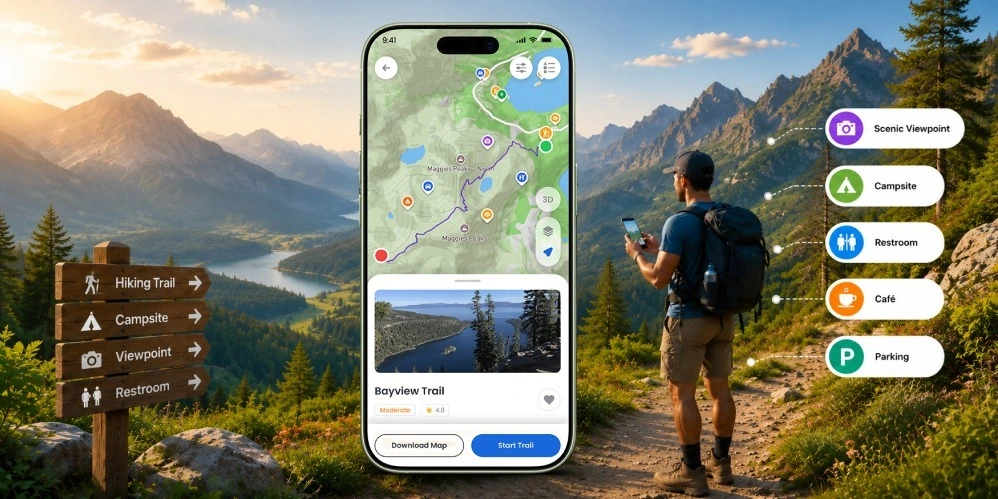
Adventure tourism is evolving beyond guided group tours and printed trail maps. Today's travelers increasingly want the freedom to explore destinations at their own pace while still having access to reliable navigation, location information, and useful visitor guidance.
Whether exploring a national park, hiking a trail, visiting a wildlife sanctuary, walking through a botanical garden, or discovering a heritage site, visitors want an experience that is both flexible and easy to navigate.
Interactive maps are helping destinations deliver this experience by giving visitors digital access to routes, attractions, amenities, and points of interest directly from their smartphones.
In this article, we'll explore how self-guided tours are changing adventure tourism and how destinations can use interactive mapping to create better visitor experiences.
Why Adventure Travelers Want More Freedom
Modern travelers often prefer flexibility over fixed itineraries. Rather than following a predetermined group schedule, visitors may want to decide where to go, how long to stay, and which attractions to explore.
Self-guided experiences allow visitors to:
- Explore attractions at their own pace
- Choose routes based on their interests
- Spend more time at places they enjoy
- Discover less-known points of interest
- Navigate without constantly asking for directions
This does not mean travelers want less information. They want useful information available when they need it, without losing the freedom to choose their own experience.
The Challenges of Traditional Guided Tours
Guided tours provide valuable storytelling, local knowledge, and personal interaction. They remain an important part of tourism and are ideal for visitors who prefer structured experiences.
However, guided tours may not suit every traveler.
Common limitations can include:
- Fixed schedules
- Group-based itineraries
- Limited flexibility
- Capacity restrictions
- Repeated navigation questions
- Less freedom to explore independently
At large outdoor destinations, guides also cannot accompany every visitor throughout the entire property.
This is where digital self-guided experiences can complement traditional tours rather than replace them.
What Is a Self-Guided Tour?
A self-guided tour allows visitors to explore a destination independently using their smartphone or another supported device.
Instead of relying entirely on printed maps or staff assistance, visitors can access a digital map containing trails, attractions, facilities, and other points of interest.
With interactive mapping, visitors can choose where they want to go, explore nearby locations, and access relevant information during their journey.
The result is a more flexible experience where visitors can decide their own pace and route.
Where Self-Guided Tours Create the Most Value
Self-guided experiences can work across many types of adventure and outdoor destinations.
National Parks
National parks can cover large areas with multiple entrances, trails, viewpoints, picnic areas, visitor centers, and facilities.
Interactive maps can help visitors:
- Find entrances and parking
- Discover hiking routes
- Locate viewpoints
- Find visitor facilities
- Explore different areas of the park
This gives visitors a clearer understanding of the destination before and during their visit.
Hiking Trails
Trail navigation can become easier when visitors can digitally access route information and important trail locations.
An interactive trail map can help visitors:
- Identify designated routes
- Understand trail layouts
- Find rest areas
- Locate viewpoints
- Discover nearby attractions
This can improve visitor confidence while helping people better understand the areas they are exploring.
Wildlife Sanctuaries
Wildlife destinations often contain observation areas, nature trails, viewing platforms, educational locations, and visitor facilities.
Interactive maps help visitors find these locations without constantly referring to paper maps or asking staff for directions.
Heritage Sites
Heritage destinations can combine navigation with storytelling and educational information.
Visitors can use digital maps to:
- Follow heritage routes
- Find historical landmarks
- Navigate between attractions
- Explore locations independently
This creates an interactive digital experience that connects navigation with the history and character of the destination.
Botanical Gardens
Large botanical gardens can contain themed gardens, plant collections, walking paths, cafés, restrooms, and visitor facilities.
A digital map can help visitors discover different areas and create their own route through the garden.
Adventure Parks
Adventure parks often spread activities across large areas.
Visitors may need to locate:
- Zipline courses
- Climbing areas
- Rope courses
- Food areas
- Equipment rental
- First-aid facilities
Digital navigation can make it easier to understand the layout and move between activities.
How OuterMap Enables Self-Guided Adventures
OuterMap helps destinations transform existing maps into interactive digital experiences that visitors can access through supported digital devices.
Instead of relying only on static maps, organizations can create a digital visitor experience that brings navigation and location information together.
Visitors can use the experience to:
- Explore outdoor destinations
- Find trails and attractions
- Locate amenities
- Discover points of interest
- Access maps through QR codes
- Navigate between mapped locations
For destinations with existing maps, interactive mapping software provides a practical way to turn those resources into a more engaging digital experience.
OuterMap can complement guided tours by giving visitors an additional option to explore independently when they want more freedom.
Benefits for Adventure Tourism Operators
Self-guided digital experiences can benefit operators as well as visitors.
Reduce Repetitive Navigation Questions
Visitors can independently find common destinations and facilities instead of relying on staff for basic directions.
Improve Navigation Across Large Areas
Digital maps can make large outdoor environments easier to understand and explore.
Encourage Attraction Discovery
Operators can highlight viewpoints, trails, attractions, facilities, and other locations that visitors might otherwise miss.
Create a More Modern Visitor Experience
An interactive mapping platform gives destinations a digital channel for presenting maps and location information in a way that fits how many travelers use technology today.
Keep Information Easier to Update
Digital content can be updated when routes, facilities, attractions, or other destination information changes.
Complement Existing Guided Experiences
Self-guided navigation does not need to replace tour guides. It can give visitors another option and help guides focus on storytelling and higher-value interactions.
What to Look for in Interactive Mapping Solutions
Destinations considering an interactive mapping solution should focus on features that directly support their visitor experience.
Easy-to-Use Interactive Maps
Maps should be simple enough for visitors to understand without extensive instructions.
Outdoor and Trail Support
The platform should work with the destination's trails, paths, roads, attractions, and other outdoor locations.
Points of Interest
Visitors should be able to discover important attractions, facilities, viewpoints, and services.
Mobile Access
Visitors should be able to access the digital map conveniently from their smartphones.
QR Code Access
QR codes placed at entrances, information boards, trailheads, and other strategic locations can provide quick access to digital maps.
Offline Capabilities
Offline access can be particularly useful in outdoor destinations where mobile connectivity may be limited.
Content Management
Destination teams should have a practical way to update maps, locations, routes, and visitor information.
Interactive Maps vs. Static Maps
Printed maps still have value, particularly at entrances, visitor centers, and locations where physical information is required.
However, digital maps can provide more flexibility.
| Static Maps | Interactive Maps |
|---|---|
| Fixed information | Interactive information |
| Limited search | Searchable locations |
| Physical distribution | Digital access |
| Difficult to update | Easier digital updates |
| Basic destination overview | Points of interest and navigation |
| Limited personalization | More flexible visitor experience |
The goal is not necessarily to remove printed maps.
Instead, destinations can transform static maps into digital maps and provide visitors with both physical and digital options.
Why Choose OuterMap for Self-Guided Experiences?
OuterMap provides interactive mapping capabilities that can help tourism and outdoor destinations create digital visitor experiences from their existing maps.
Transform Existing Maps Into Digital Experiences
Organizations can use existing maps as the foundation for an interactive digital experience, reducing the need to recreate their destination from scratch.
Support Outdoor Navigation
OuterMap can support outdoor mapping use cases such as parks, trails, tourism destinations, and other large outdoor environments.
Make Attractions and Facilities Easier to Discover
Destinations can organize important locations such as trails, viewpoints, attractions, amenities, and visitor facilities.
Give Visitors More Freedom
Instead of following a fixed route or waiting for a guided tour, visitors can use the digital map to explore according to their own interests and pace.
Combine Navigation With Visitor Information
The digital experience can bring maps, points of interest, and location information together, helping visitors get more value from their journey.
Conclusion
Adventure travelers increasingly want the freedom to explore destinations at their own pace without sacrificing access to useful navigation and destination information.
Interactive maps provide a practical way for parks, trails, wildlife sanctuaries, botanical gardens, heritage sites, and adventure parks to support this changing visitor expectation.
Self-guided experiences can make navigation easier, encourage attraction discovery, reduce repetitive questions, and give visitors more control over their journey.
With OuterMap, destinations can transform existing maps into interactive digital experiences and provide visitors with a convenient digital guide for exploring outdoor environments.
The future of adventure tourism is not necessarily about choosing between guided and self-guided experiences. It is about giving visitors the freedom to choose how they explore.
Frequently Asked Questions
What is a self-guided tour?
A self-guided tour allows visitors to explore a destination independently without following a tour guide. Visitors can use maps, digital content, and other resources to choose their own routes and explore at their own pace.
How do interactive maps help visitors?
Interactive maps help visitors find attractions, trails, amenities, facilities, and other points of interest while providing a clearer understanding of the destination.
Can interactive mapping be used for adventure tourism?
Yes. Interactive mapping can be used for national parks, hiking trails, wildlife sanctuaries, botanical gardens, heritage sites, adventure parks, and other outdoor tourism destinations.
Can self-guided tours replace traditional guided tours?
Not necessarily. Self-guided experiences can complement traditional tours by giving visitors an additional way to explore independently while guided tours continue to provide storytelling and personal expertise.
What is interactive mapping software?
Interactive mapping software allows organizations to create and manage digital maps that visitors can explore. Depending on the platform, maps can include locations, routes, points of interest, and other visitor information.
Can digital maps work offline in outdoor destinations?
Some platforms support offline maps and information, which can be useful in outdoor areas where mobile connectivity is limited or unreliable.
How can tourism destinations create self-guided experiences?
Destinations can use interactive mapping software to turn existing maps into digital experiences, add attractions and points of interest, provide routes, and give visitors mobile access through methods such as QR codes.
How can OuterMap support self-guided tourism?
OuterMap helps organizations transform existing maps into interactive digital experiences that can support outdoor navigation, points of interest, attractions, facilities, and self-guided visitor exploration.