How Digital Maps Improve Campground Experiences
Digital campground maps can make it easier for guests to find campsites, amenities, trails, recreation areas, and other important locations throughout their stay. By adding an interactive layer to traditional campground maps, operators can provide a more convenient guest experience while making location-based information easier to access and manage.
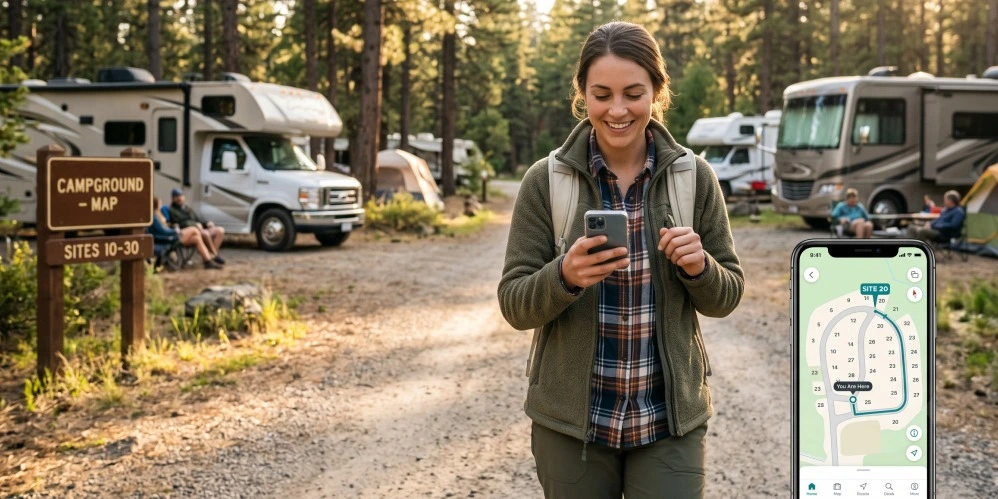
For many campers, the adventure begins before they set up their tent or park their RV. After a long journey, the last thing guests want is to drive around looking for their campsite, campground office, restroom, or other facilities.
Traditional campground maps can provide a useful overview, but they often leave visitors with questions. Campsites may be difficult to locate, amenities may not be clearly marked, and important information can be spread across signs, brochures, websites, and emails.
Today, campers increasingly rely on their smartphones throughout their journey. Digital campground maps give them a more convenient way to explore the campground, find their campsite, locate amenities, and access important information.
For campground operators, interactive maps can also make it easier to provide a better guest experience while keeping location information organized and accessible.
Why traditional campground maps are not always enough
Printed maps and PDF campground maps are still useful, but they have limitations when visitors need specific directions.
Guests may have difficulty finding:
- Their reserved campsite
- Campground entrances
- Check-in offices
- Restrooms and showers
- Camp stores
- Recreation areas
- Trails and viewpoints
- Parking areas
- Restricted or quiet zones
When guests cannot find a location, they may need to call the campground office or ask staff for directions. For busy campgrounds, repeated navigation questions can take up valuable staff time.
A digital map adds an interactive layer that makes campground information easier to search, explore, and update.
What do campers expect from digital campground maps?
Modern campers are comfortable using smartphones to plan trips, find destinations, and access information. They increasingly expect the same convenience when they arrive at a campground.
Before arrival, guests may want to:
- Explore the campground layout
- Understand where their campsite is located
- Find entrances and check-in areas
- Locate nearby amenities
- Identify trails and recreation areas
During their stay, they may want to:
- Navigate to their campsite
- Find restrooms and showers
- Discover playgrounds and picnic areas
- Locate camp stores and other facilities
- Find hiking trails and viewpoints
- Access campground rules and important information
This makes an Interactive Campground Map more than a digital version of a paper map. It can become a useful navigation and information tool throughout the guest's stay.
What Is a Digital Campground Map?
A digital campground map transforms a traditional campground layout into an interactive digital experience.
Instead of interpreting symbols on a printed map, visitors can explore locations on their smartphones or other supported devices. Depending on the platform, they can search for destinations, view points of interest, follow routes, and access additional information.
An Interactive Digital Map can combine campsite locations, roads, walking paths, amenities, trails, viewpoints, and other important locations in one experience.
This can make campground navigation easier while helping guests spend more time enjoying the outdoors.
How OuterMap Helps Campgrounds
OuterMap helps organizations transform existing maps into interactive digital experiences. For campgrounds, this can create a more convenient way for guests to navigate their surroundings and discover important facilities.
1. Simplify Campsite Navigation
Finding the correct campsite can be challenging in large campgrounds, particularly when guests arrive after dark or are visiting for the first time.
An interactive map can help visitors identify their campsite, understand the campground layout, and navigate along available roads or paths.
This can help provide:
- Easier arrivals
- Less navigation confusion
- Fewer direction-related questions
- A smoother first impression
2. Help Guests Discover Campground Amenities
Guests often need to find facilities during their stay. An interactive map can make important amenities easier to locate, including:
- Restrooms
- Showers
- Laundry facilities
- Playgrounds
- Picnic areas
- Camp stores
- Dump stations
- Visitor centers
Making these locations easier to find can improve convenience and help guests make better use of the facilities available to them.
3. Support a Smoother Check-In Experience
The visitor journey starts as soon as guests enter the campground. Digital mapping can help visitors find the check-in office, designated parking, self-check-in locations where available, and the route toward their campsite.
This can make arrivals more organized and reduce unnecessary congestion or confusion around campground entrances.
4. Make Campground Zones and Guidelines Easier to Understand
Campgrounds often have different zones and rules that visitors need to understand.
An interactive map can help clearly identify locations such as:
- Quiet zones
- Pet-friendly areas
- Restricted areas
- Recreation zones
- Designated parking
- Important safety locations
This provides visitors with useful information while helping them understand how different areas of the campground should be used.
Benefits of Digital Campground Mapping for Operators
Digital mapping can benefit campground teams as well as guests.
Reduce Repetitive Direction Questions
When visitors can search for locations themselves, staff may spend less time providing basic directions.
Keep Information Easier to Update
Digital information can be updated when campsite locations, amenities, trails, or other campground details change, reducing dependence on reprinting physical maps.
Improve Guest Communication
A digital experience can bring maps and important location-based information together, making it easier for guests to access relevant information during their stay.
Promote Campground Amenities
Operators can use interactive maps to make facilities, recreation areas, trails, viewpoints, and other experiences more visible to visitors.
Understand Visitor Interests
Where analytics are available, campground operators can gain insights into how visitors interact with maps and which locations receive the most attention.
What to Look for in Digital Campground Mapping Software
Choosing the right digital campground mapping software depends on the campground's size, layout, connectivity, and visitor needs.
Interactive Maps
Visitors should be able to explore the campground and understand where campsites, roads, amenities, and other destinations are located.
Campsite and Point-of-Interest Search
The platform should make it easy to find specific campsites, facilities, trails, viewpoints, and other locations.
Outdoor Navigation
Campgrounds often cover large outdoor areas. The mapping solution should support roads, walking paths, trails, and other outdoor routes where applicable.
Mobile Access
Guests should be able to access the map conveniently from their smartphones without needing to carry a separate printed guide.
Offline Access
Some campgrounds have limited or unreliable connectivity. Offline map access can provide a more dependable experience in these environments.
Easy Content Management
Campground teams should be able to update locations and visitor information as the property changes.
Interactive Digital Mapping Solutions for Different Campgrounds
Different properties can use digital mapping in different ways.
RV Parks
Help guests find RV sites, parking areas, dump stations, facilities, and campground roads.
Traditional Campgrounds
Provide navigation to campsites, restrooms, trails, picnic areas, recreation zones, and other amenities.
Glamping Resorts
Combine navigation with information about accommodations, activities, dining, amenities, and guest services.
Holiday Parks
Help visitors explore accommodation areas, entertainment facilities, restaurants, recreational spaces, and other attractions.
Wilderness and Nature Destinations
Provide digital access to trails, viewpoints, designated areas, and important visitor information where connectivity and safety requirements allow.
Digital Campground Maps vs. Printed Maps
Printed maps remain useful, particularly where physical information is needed at entrances, check-in desks, or individual campsites. However, digital maps can provide additional flexibility.
| Printed Campground Map | Digital Campground Map |
|---|---|
| Static information | Interactive information |
| Limited search | Searchable locations |
| Difficult to update | Easier digital updates |
| Basic overview | Detailed locations and POIs |
| Usually carried physically | Accessible on supported devices |
| Limited route guidance | Can support digital navigation |
The two approaches do not have to compete. Campgrounds can continue using physical maps and signs while adding a digital navigation layer for visitors who prefer using their smartphones.
Why Choose OuterMap for Campground Mapping?
OuterMap provides an Interactive Digital Mapping Platform that can help campgrounds turn existing maps into useful digital experiences.
Turn Existing Maps Into Interactive Experiences
Campgrounds can use existing maps as the foundation for a digital experience rather than starting completely from scratch.
Make Campsites and Amenities Easier to Find
Operators can organize important campground locations such as campsites, restrooms, trails, recreation areas, parking, and other points of interest.
Support Outdoor Wayfinding
OuterMap is designed to support both indoor and outdoor mapping use cases, making it suitable for environments where visitors need to navigate larger outdoor spaces.
Provide a More Convenient Guest Experience
Instead of relying only on printed maps and signs, campgrounds can give guests a digital way to explore the property, find destinations, and access location information.
Manage Digital Map Information
A centralized digital mapping platform can make it easier for campground teams to maintain location and visitor information as the property changes.
How can OuterMap help campgrounds?
OuterMap can help campgrounds transform existing maps into interactive digital experiences, making campsites, amenities, trails, and other locations easier for visitors to find and explore.
Conclusion
Camping should be about enjoying nature, exploring the outdoors, and creating memorable experiences — not spending unnecessary time searching for a campsite or trying to understand a complicated campground map.
Digital campground maps provide a more convenient way for guests to explore campgrounds, find campsites, locate amenities, and access useful information throughout their stay.
Whether you manage an RV park, campground, glamping property, holiday park, or outdoor destination, an Interactive Digital Mapping Solution can add a useful digital layer to the visitor journey.
OuterMap helps organizations transform existing maps into interactive digital experiences, giving campgrounds a practical way to improve navigation and help guests spend less time finding their way and more time enjoying the outdoors.
Frequently Asked Questions
What are digital campground maps?
Digital campground maps are interactive maps that help visitors explore a campground, find campsites, locate amenities, and access important location information through supported digital devices.
How can interactive campground maps improve the guest experience?
Interactive campground maps can help guests find their campsites, navigate roads and trails, locate amenities, and explore the property without relying entirely on printed maps or asking staff for directions.
What is digital campground mapping software?
Digital campground mapping software allows campground operators to create, manage, and share digital maps containing campsites, amenities, trails, roads, and other points of interest.
Can campground maps work offline?
Some digital mapping platforms support offline maps and information. This can be useful for campgrounds where mobile connectivity is limited or unreliable.
Can digital campground maps show campsites and amenities?
Yes. A digital campground map can display campsites, restrooms, showers, camp stores, trails, recreation areas, parking, and other points of interest, depending on the platform and map data.
Can digital maps help campers find their reserved campsite?
Yes. When campsite locations are mapped correctly, visitors can search for or identify their campsite and use the available map and route information to navigate toward it.
What is an interactive digital mapping platform?
An interactive digital mapping platform allows organizations to create and manage maps that users can explore digitally. Depending on the platform, it can include search, points of interest, routes, location information, and other visitor-focused features.